

Lakeville, Minnesota, experiences a humid continental climate characterized by hot summers and cold winters. The average annual temperature is approximately 54.7°F, with January lows averaging 6.3°F and July highs reaching around 81.8°F. Precipitation is fairly evenly distributed throughout the year, totaling about 33.44 inches annually. The city typically experiences its first frost between October 1 and October 10, and the last frost between April 21 and April 30, resulting in an average of 125 to 150 frost days per year. Lakeville falls within Plant Hardiness Zone 4b, indicating minimum temperatures between -25°F and -20°F.
In response to these climatic conditions, Lakeville has implemented several environmental initiatives to promote sustainability and protect natural resources. The city participates in the Minnesota GreenStep Cities program, focusing on reducing energy consumption, conserving natural resources, improving transportation infrastructure, and promoting sustainable growth.
To enhance local water quality, Lakeville’s Environmental Resources Department collaborates with local entities on projects such as stream restorations, stormwater improvements, and lake health monitoring. Funding for these projects comes from various sources, including Clean Water Fund grants and partnerships with organizations like the Vermillion River Watershed Joint Powers Organization.
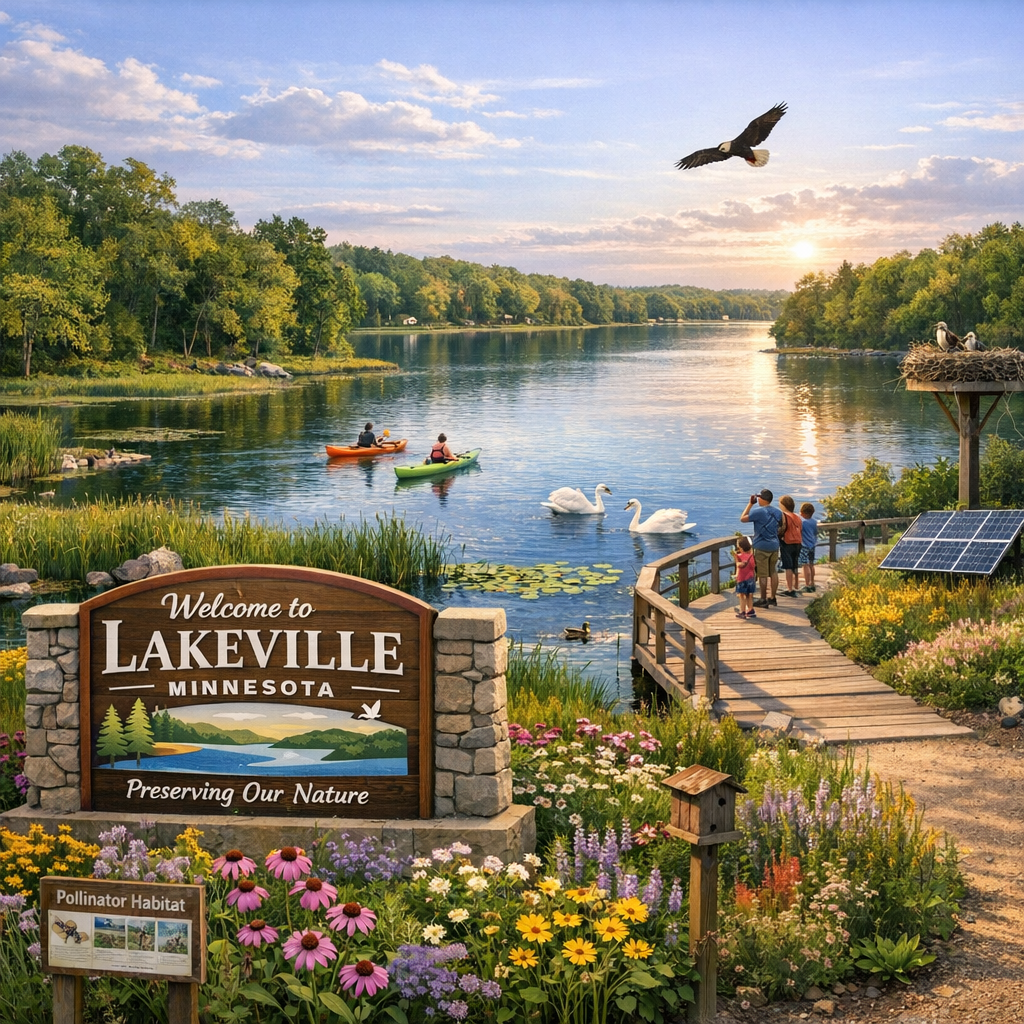
The city also emphasizes biodiversity through the restoration of stream corridors, shorelines, woodlands, prairies, pollinator gardens, rain gardens, and wetlands. Over 105 acres have been restored to native vegetation, providing critical habitats for endangered pollinator and wildlife species.
Residents are encouraged to participate in environmental initiatives through programs like the Landscaping for Clean Water program, which offers educational classes and incentives for installing rain gardens, native gardens, or native shoreline plantings.
By understanding Lakeville’s climate and engaging in these environmental initiatives, residents can contribute to the city’s sustainability efforts and help preserve its natural beauty for future generations.